Cake is one of the world’s most popular desserts. From birthday cakes and wedding cakes to chocolate cakes and traditional regional desserts, cake has a special place in celebrations and everyday life.
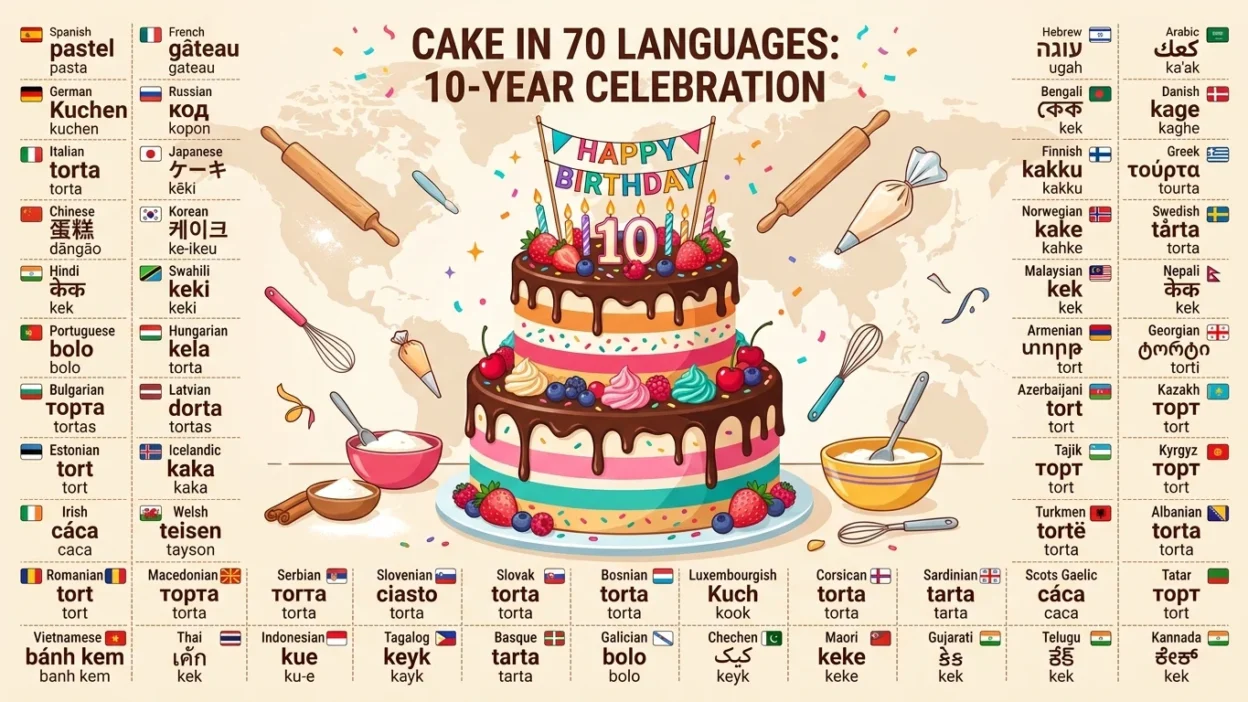
If you’re learning languages or creating multilingual vocabulary content, learning how to say “cake” in different languages is a delicious way to expand your vocabulary. Below are 70 languages with the native word and an easy English pronunciation.
| Language | Native Word | Easy English Pronunciation |
|---|---|---|
| English | Cake | KAYK |
| Spanish | Pastel | Pas-TEL |
| French | Gâteau | Ga-TOH |
| German | Kuchen | KOO-khen |
| Italian | Torta | TOR-ta |
| Portuguese | Bolo | BOH-loh |
| Dutch | Taart | TAART |
| Swedish | Tårta | TOR-ta |
| Norwegian | Kake | KAH-keh |
| Danish | Kage | KAY-eh |
| Finnish | Kakku | KAHK-koo |
| Icelandic | Kaka | KA-ka |
| Irish | Cáca | KAW-ka |
| Welsh | Cacen | KAH-ken |
| Scottish Gaelic | Cèic | KAYK |
| Polish | Ciasto | CHAS-toh |
| Czech | Dort | DORT |
| Slovak | Torta | TOR-ta |
| Slovenian | Torta | TOR-ta |
| Croatian | Torta | TOR-ta |
| Serbian | Торта | TOR-ta |
| Bosnian | Torta | TOR-ta |
| Romanian | Tort | TORT |
| Hungarian | Torta | TOR-ta |
| Greek | Κέικ | KAYK |
Cake in Russian, Turkish, Arabic, and South Asian Languages
| Language | Native Word | Easy English Pronunciation |
|---|---|---|
| Russian | Торт | TORT |
| Ukrainian | Торт | TORT |
| Belarusian | Торт | TORT |
| Bulgarian | Торта | TOR-ta |
| Macedonian | Торта | TOR-ta |
| Albanian | Tortë | TOR-tuh |
| Turkish | Pasta | PAS-ta |
| Arabic | كعكة | KAH-ka |
| Hebrew | עוגה | OO-ga |
| Persian | کیک | KEYK |
| Kurdish | Kek | KEK |
| Hindi | केक | KAYK |
| Urdu | کیک | KAYK |
| Punjabi | ਕੇਕ | KAYK |
| Bengali | কেক | KEK |
| Gujarati | કેક | KAYK |
| Marathi | केक | KAYK |
| Nepali | केक | KAYK |
| Sinhala | කේක් | KAYK |
| Tamil | கேக் | KAYK |
| Telugu | కేక్ | KAYK |
| Kannada | ಕೇಕ್ | KAYK |
| Malayalam | കേക്ക് | KAYK |
| Thai | เค้ก | KAYK |
| Vietnamese | Bánh | BANH |
Cake in Asian Languages
| Language | Native Word | Easy English Pronunciation |
|---|---|---|
| Indonesian | Kue | KOO-eh |
| Malay | Kek | KEK |
| Filipino (Tagalog) | Keyk | KAYK |
| Chinese (Mandarin) | 蛋糕 | DAN-gao |
| Japanese | ケーキ | KAY-kee |
| Korean | 케이크 | KAY-ee-keu |
| Mongolian | Бялуу | BYA-loo |
| Burmese | ကိတ်မုန့် | KATE-mont |
| Khmer | នំខេក | Nom KAYK |
| Lao | ເຄັກ | KEK |
| Swahili | Keki | KEH-kee |
| Zulu | Ikhekhe | Ee-KHEH-kheh |
| Afrikaans | Koek | KOOK |
| Amharic | ኬክ | KEK |
| Yoruba | Akara oyinbo | Ah-ka-ra oh-YEEN-boh |
| Hausa | Kek | KEK |
| Māori | Keke | KEH-keh |
| Hawaiian | Keke | KEH-keh |
| Samoan | Keke | KEH-keh |
| Esperanto | Kuko | KOO-koh |
What Is Cake? 🎂
Cake is a baked food usually made from ingredients such as flour, sugar, eggs, and fat. Depending on the recipe, it may also contain milk, chocolate, fruit, nuts, spices, cream, or other ingredients.
Cake can be served plain or decorated with:
- 🍫 Chocolate
- 🍓 Fresh fruit
- 🧁 Frosting
- 🍦 Cream
- 🌈 Sprinkles
- 🍯 Caramel
- 🥜 Nuts
- 🍒 Cherries
Different countries have developed their own styles of cakes, making cake an interesting part of culinary culture.
How Do You Say Cake in Spanish?
In Spanish, cake can be translated as pastel in many regions.
Pronunciation: Pas-TEL
In some Spanish-speaking countries, other words such as torta or tarta may be used depending on the region and type of cake.
How Do You Say Cake in French?
In French, cake can be gâteau.
Pronunciation: Ga-TOH
The word gâteau is widely used for cakes and other sweet baked desserts.
How Do You Say Cake in German?
In German, cake is commonly Kuchen.
Pronunciation: KOO-khen
German also has different words for particular types of cakes and pastries.
How Do You Say Cake in Italian?
In Italian, cake is torta.
Pronunciation: TOR-ta
The word is commonly used for cakes and sweet pies or tarts, depending on the specific dessert.
How Do You Say Cake in Portuguese?
In Portuguese, cake is bolo.
Pronunciation: BOH-loh
The word is widely used for cakes in Portuguese-speaking countries.
How Do You Say Cake in Arabic?
In Arabic, cake can be written as كعكة.
Pronunciation: KAH-ka
Modern Arabic speakers may also use other terms for specific cakes and pastries.
How Do You Say Cake in Hindi?
In Hindi, cake is केक.
Pronunciation: KAYK
The word is a direct adaptation of the English word and is widely understood in modern Hindi.
How Do You Say Cake in Urdu?
In Urdu, cake is کیک.
Pronunciation: KAYK
The English-derived term is commonly used in everyday Urdu, particularly for modern Western-style cakes.
How Do You Say Cake in Chinese?
In Mandarin Chinese, cake is 蛋糕.
Pinyin: dàngāo
Easy pronunciation: DAN-gao
The word is commonly used for cakes in general.
How Do You Say Cake in Japanese?
In Japanese, cake is ケーキ.
Pronunciation: KAY-kee
It is written in katakana because it is a loanword derived from English.
How Do You Say Cake in Korean?
In Korean, cake is 케이크.
Pronunciation: KAY-ee-keu
The word is a Korean transliteration of the English term.
Popular Types of Cake 🍰
There are countless varieties of cake around the world. Some popular examples include:
- Chocolate cake
- Vanilla cake
- Red velvet cake
- Cheesecake
- Carrot cake
- Sponge cake
- Fruit cake
- Coffee cake
- Pound cake
- Angel food cake
- Birthday cake
- Wedding cake
- Ice cream cake
- Black Forest cake
- Marble cake
Cake and Cultural Traditions
Cake is strongly associated with celebrations and special occasions in many cultures.
🎂 Birthdays: Birthday cakes are commonly decorated with candles and frosting.
💍 Weddings: Wedding cakes can have multiple layers and elaborate decorations.
🎉 Holidays: Different countries have traditional cakes associated with religious and seasonal celebrations.
👨👩👧 Family gatherings: Cakes are often prepared for family events and celebrations.
The ingredients, shapes, decorations, and serving traditions can vary greatly from one culture to another.
Cake vs. Cupcake
Cake and cupcakes are closely related, but they are usually served differently.
| Cake | Cupcake |
|---|---|
| Usually made as one large cake | Baked as individual portions |
| Often sliced before serving | Usually eaten individually |
| Can have multiple layers | Usually has one small cake portion |
| Common at large celebrations | Popular for parties and individual servings |
| Can have elaborate decorations | Often decorated with individual frosting |
Cake vs. Pastry
Cake and pastry are both baked foods, but they are not the same category.
Cake is generally made with a soft, sweet batter, while pastry is usually associated with dough made using flour and fat.
Examples of pastries include:
- Croissants
- Danishes
- Tarts
- Turnovers
- Puff pastry desserts
Why Learn “Cake” in Different Languages?
Learning the word cake in different languages can be useful for several reasons.
🌍 Travel: You can recognize cake-related vocabulary when visiting bakeries and cafés abroad.
🗣️ Language learning: Food vocabulary is practical and easy to practice.
🍰 Baking: International recipes may use different names for similar desserts.
📚 Education: Food words are useful for students learning everyday vocabulary.
❤️ Culture: Cakes can reveal interesting traditions surrounding birthdays, weddings, holidays, and family celebrations.
Related Cake Vocabulary
If you’re learning cake in different languages, these related words are useful too:
- Bakery
- Baking
- Flour
- Sugar
- Egg
- Butter
- Cream
- Frosting
- Icing
- Chocolate
- Vanilla
- Recipe
- Dessert
- Pastry
- Cupcake
- Birthday cake
How to Remember “Cake” in Different Languages
Some languages use words that sound very different from English:
Spanish: Pastel
French: Gâteau
German: Kuchen
Italian: Torta
Portuguese: Bolo
Polish: Ciasto
Chinese: 蛋糕
Japanese: ケーキ
Other languages use a form that closely resembles English:
Hindi: केक
Urdu: کیک
Punjabi: ਕੇਕ
Malay: Kek
Kurdish: Kek
Japanese: ケーキ
Korean: 케이크
This makes cake an interesting word to compare across languages.
Cake in 70 Languages — Quick Reference
English: Cake
Spanish: Pastel
French: Gâteau
German: Kuchen
Italian: Torta
Portuguese: Bolo
Dutch: Taart
Swedish: Tårta
Norwegian: Kake
Danish: Kage
Finnish: Kakku
Icelandic: Kaka
Irish: Cáca
Welsh: Cacen
Scottish Gaelic: Cèic
Polish: Ciasto
Czech: Dort
Slovak: Torta
Slovenian: Torta
Croatian: Torta
Serbian: Торта
Bosnian: Torta
Romanian: Tort
Hungarian: Torta
Greek: Κέικ
Russian: Торт
Ukrainian: Торт
Belarusian: Торт
Bulgarian: Торта
Macedonian: Торта
Albanian: Tortë
Turkish: Pasta
Arabic: كعكة
Hebrew: עוגה
Persian: کیک
Kurdish: Kek
Hindi: केक
Urdu: کیک
Punjabi: ਕੇਕ
Bengali: কেক
Gujarati: કેક
Marathi: केक
Nepali: केक
Sinhala: කේක්
Tamil: கேக்
Telugu: కేక్
Kannada: ಕೇಕ್
Malayalam: കേക്ക്
Thai: เค้ก
Vietnamese: Bánh
Indonesian: Kue
Malay: Kek
Filipino: Keyk
Chinese: 蛋糕
Japanese: ケーキ
Korean: 케이크
Mongolian: Бялуу
Burmese: ကိတ်မုန့်
Khmer: នំខេក
Lao: ເຄັກ
Swahili: Keki
Zulu: Ikhekhe
Afrikaans: Koek
Amharic: ኬክ
Yoruba: Akara oyinbo
Hausa: Kek
Māori: Keke
Hawaiian: Keke
Samoan: Keke
Esperanto: Kuko
Frequently Asked Questions
What is cake in different languages?
Cake has many different names around the world. For example, it is pastel in Spanish, gâteau in French, Kuchen in German, torta in Italian, bolo in Portuguese, and 蛋糕 (dàngāo) in Mandarin Chinese.
What is cake called in Spanish?
Cake is commonly called pastel in Spanish. Depending on the country and type of cake, torta or tarta may also be used.
What is cake called in French?
Cake is gâteau in French, pronounced approximately Ga-TOH.
What is cake called in German?
Cake is commonly Kuchen in German, pronounced approximately KOO-khen.
What is cake called in Hindi?
Cake is केक (kek) in Hindi and is pronounced approximately KAYK.
What is cake called in Urdu?
Cake is کیک (cake) in Urdu and is pronounced approximately KAYK.
What is cake called in Chinese?
Cake is 蛋糕 (dàngāo) in Mandarin Chinese, pronounced approximately DAN-gao.
What is cake called in Japanese?
Cake is ケーキ (kēki) in Japanese, pronounced approximately KAY-kee.
What is cake called in Korean?
Cake is 케이크 (keikeu) in Korean, pronounced approximately KAY-ee-keu.
Is cake the same in every country?
No. Different cultures have their own recipes, ingredients, textures, decorations, and traditions. Even the word used for cake can vary significantly between languages.
Conclusion 🎂🌍
From pastel in Spanish and gâteau in French to torta in Italian, bolo in Portuguese, and 蛋糕 in Mandarin, the simple word cake has many fascinating forms around the world.
Learning cake in different languages is a fun way to combine food, culture, and language learning. Whether you’re traveling, studying languages, baking international recipes, or simply building your vocabulary, these 70 translations give you a sweet place to start.

Daniel Whitmore is a language writer and editor from the United Kingdom who is passionate about making language learning accessible to everyone. He specializes in English grammar, vocabulary, spelling differences, pronunciation, and multilingual communication. His articles break down complex language concepts into clear, practical lessons that readers can apply in everyday conversations and writing. Daniel enjoys exploring the history, culture, and evolution of languages while creating engaging content for students, educators, travelers, and language enthusiasts. His goal is to provide accurate, reader-friendly resources that help people build confidence in learning English and other world languages through simple explanations and real-life examples.