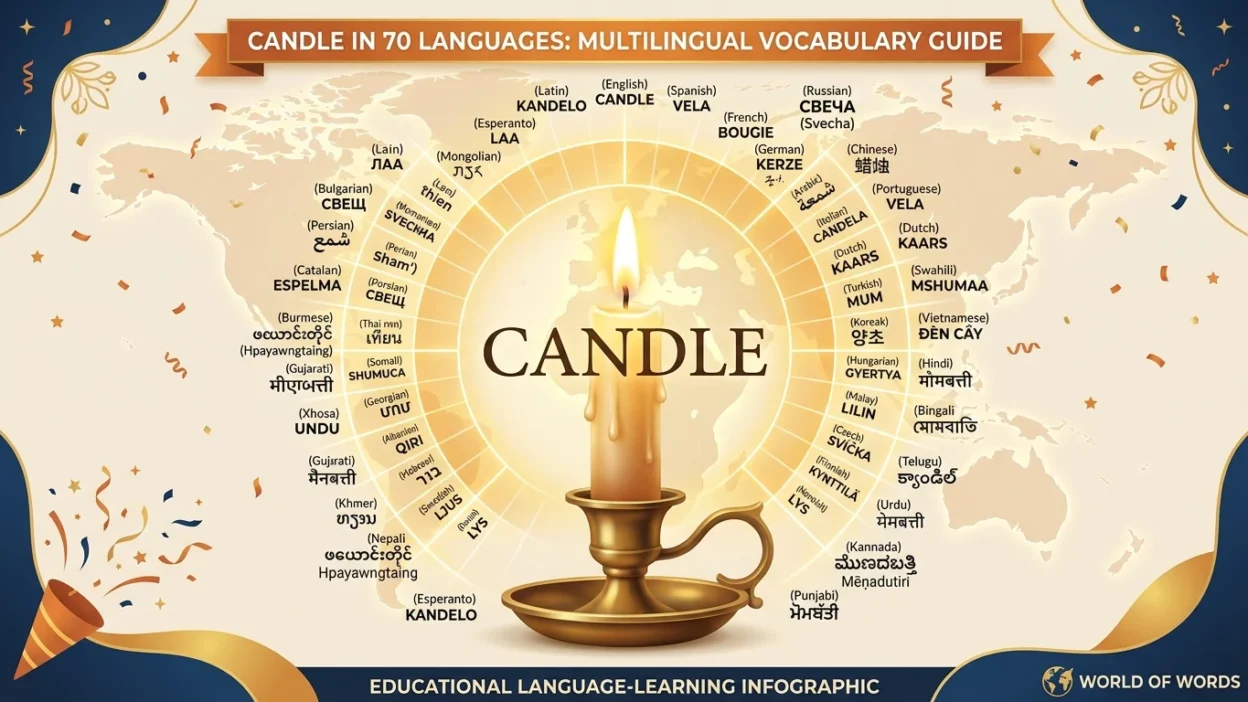
Candle is a common everyday word connected with light, celebrations, relaxation, traditions, and special occasions. From birthday candles to decorative candles and traditional sources of light, candles are found in cultures around the world.
Below, you’ll find “candle” in 70 languages, with the native word and an easy English pronunciation.
| Language | Native Word | Easy English Pronunciation |
|---|---|---|
| English | Candle | KAN-dul |
| Spanish | Vela | VEH-la |
| French | Bougie | BOO-zhee |
| German | Kerze | KERT-seh |
| Italian | Candela | Kan-DEH-la |
| Portuguese | Vela | VEH-la |
| Dutch | Kaars | KAARS |
| Swedish | Ljus | YOOS |
| Norwegian | Lys | LEES |
| Danish | Lys | LÜS |
| Finnish | Kynttilä | KÜN-ti-la |
| Icelandic | Kerti | KER-ti |
| Irish | Coinneal | KIN-yul |
| Welsh | Cannwyll | KAN-will |
| Scottish Gaelic | Coinneal | KIN-yul |
| Polish | Świeca | SHVYEH-tsa |
| Czech | Svíčka | SVEECH-ka |
| Slovak | Sviečka | SVYECH-ka |
| Slovenian | Sveča | SVEH-cha |
| Croatian | Svijeća | SVYEH-cha |
| Serbian | Свећа | SVEH-cha |
| Bosnian | Svijeća | SVYEH-cha |
| Romanian | Lumânare | Loo-muh-NA-reh |
| Hungarian | Gyertya | DYER-tya |
| Greek | Κερί | Keh-REE |
Candle in European, Middle Eastern, and South Asian Languages
| Language | Native Word | Easy English Pronunciation |
|---|---|---|
| Russian | Свеча | SVEH-cha |
| Ukrainian | Свічка | SVEECH-ka |
| Belarusian | Свечка | SVECH-ka |
| Bulgarian | Свещ | SVESH |
| Macedonian | Свеќа | SVEH-kya |
| Albanian | Qiri | CHEE-ree |
| Turkish | Mum | MOOM |
| Arabic | شمعة | SHAM-ah |
| Hebrew | נר | NER |
| Persian | شمع | SHAM |
| Kurdish | Mûm | MOOM |
| Hindi | मोमबत्ती | Mohm-BAT-tee |
| Urdu | موم بتی | MOHM-ba-tee |
| Punjabi | ਮੋਮਬੱਤੀ | MOHM-bat-tee |
| Bengali | মোমবাতি | MOH-mo-ba-tee |
| Gujarati | મીણબત્તી | MEEN-bat-tee |
| Marathi | मेणबत्ती | MAYN-bat-tee |
| Nepali | मैनबत्ती | MAIN-bat-tee |
| Sinhala | ඉටිපන්දම | Ee-tee-PAN-da-ma |
| Tamil | மெழுகுவர்த்தி | Meh-zhoo-goo-VAR-thee |
| Telugu | కొవ్వొత్తి | Kov-voht-tee |
| Kannada | ಮೇಣದ ಬತ್ತಿ | MAY-na BAT-tee |
| Malayalam | മെഴുകുതിരി | Meh-zhoo-koo-THI-ree |
| Thai | เทียน | TIAN |
| Vietnamese | Nến | NEN |
Candle in Asian Languages
| Language | Native Word | Easy English Pronunciation |
|---|---|---|
| Indonesian | Lilin | LEE-leen |
| Malay | Lilin | LEE-leen |
| Filipino (Tagalog) | Kandila | Kan-DEE-la |
| Chinese (Mandarin) | 蜡烛 | LAH-joo |
| Japanese | ろうそく | ROH-soh-koo |
| Korean | 양초 | YANG-cho |
| Mongolian | Лаа | LAA |
| Burmese | ဖယောင်းတိုင် | Pha-YAUNG-dine |
| Khmer | ទៀន | Tien |
| Lao | ທຽນ | TIAN |
Candle in African and Pacific Languages
| Language | Native Word | Easy English Pronunciation |
|---|---|---|
| Swahili | Mshumaa | M-shoo-MAA |
| Zulu | Ikhandlela | Ee-KHAN-dleh-la |
| Afrikaans | Kers | KERS |
| Amharic | ሻማ | SHA-ma |
| Yoruba | Fìtílà | Fee-TEE-la |
| Hausa | Kyandir | Kyan-DEER |
| Māori | Rāme | RAA-meh |
| Hawaiian | Kukui | Koo-KOO-ee |
| Samoan | Moligaʻo | Moh-lee-GAH-oh |
| Esperanto | Kandelo | Kan-DEH-lo |
What Does Candle Mean? 🕯️
A candle is a usually cylindrical object made from wax or another combustible material with a wick running through it. When the wick is lit, the candle produces a flame and provides light.
Candles can have practical, decorative, ceremonial, and cultural uses.
Common types include:
- 🕯️ Birthday candles
- 🕯️ Scented candles
- 🕯️ Decorative candles
- 🕯️ Religious candles
- 🕯️ Emergency candles
- 🕯️ Tea lights
- 🕯️ Pillar candles
- 🕯️ Taper candles
How Do You Say Candle in Spanish?
In Spanish, candle is vela.
Pronunciation: VEH-la
Example:
La vela está encendida.
Meaning: The candle is lit.
How Do You Say Candle in French?
In French, candle is bougie.
Pronunciation: BOO-zhee
The word is commonly used for ordinary, decorative, and scented candles.
How Do You Say Candle in German?
In German, candle is Kerze.
Pronunciation: KERT-seh
The plural is Kerzen, meaning candles.
How Do You Say Candle in Italian?
In Italian, candle is candela.
Pronunciation: Kan-DEH-la
The word is also related to the Latin root associated with brightness and light.
How Do You Say Candle in Portuguese?
In Portuguese, candle is vela.
Pronunciation: VEH-la
The same word can have different meanings depending on context, so the surrounding sentence helps identify the intended meaning.
How Do You Say Candle in Arabic?
In Arabic, candle is شمعة.
Pronunciation: SHAM-ah
The word is widely used when talking about candles used for light, decoration, or celebrations.
How Do You Say Candle in Hindi?
In Hindi, candle is मोमबत्ती.
Pronunciation: Mohm-BAT-tee
The word is commonly used for wax candles.
How Do You Say Candle in Urdu?
In Urdu, candle is موم بتی.
Pronunciation: MOHM-ba-tee
It is a familiar everyday word used for candles used for lighting and celebrations.
How Do You Say Candle in Chinese?
In Mandarin Chinese, candle is 蜡烛.
Pinyin: làzhú
Easy pronunciation: LAH-joo
The word is commonly used for candles in everyday Chinese.
How Do You Say Candle in Japanese?
In Japanese, candle is ろうそく.
Pronunciation: ROH-soh-koo
It is commonly written in hiragana, although the word can also appear in other writing contexts.
How Do You Say Candle in Korean?
In Korean, candle is 양초.
Pronunciation: YANG-cho
The word is commonly used for candles used at home, during celebrations, and for decoration.
Candle and Birthday Celebrations 🎂🕯️
One of the most familiar uses of candles is the birthday candle.
Birthday cakes are often decorated with candles representing the age of the person celebrating. In many cultures, the birthday person blows out the candles after making a wish.
Useful related phrases include:
- Birthday candle
- Light a candle
- Blow out the candle
- Candle flame
- Candle wax
- Candle holder
- Scented candle
Candle vs. Lantern
A candle and a lantern can both provide light, but they are different.
| Candle | Lantern |
|---|---|
| Usually has a wick and combustible wax | Usually contains a light source inside a protective structure |
| Produces an open flame | Often protects the flame |
| Usually small and portable | Can be larger and designed for carrying |
| Used for decoration, celebrations, and light | Traditionally used as a portable light |
Candle vs. Light
The words candle and light are related but have different meanings.
A candle is a physical object that can produce light when its wick is burning.
Light is the illumination produced by a source such as a candle, lamp, bulb, or the sun.
For example:
The candle gives off a warm light.
Why Learn “Candle” in Different Languages?
Learning candle in different languages can be useful for language learners, travelers, students, writers, and anyone interested in cultural vocabulary.
🌍 Travel: You may encounter candle-related vocabulary in shops, restaurants, and celebrations.
🗣️ Language learning: Everyday objects are useful for building practical vocabulary.
🎂 Celebrations: Candles are closely connected with birthdays and other special occasions.
🕯️ Culture: Candles can have important decorative, traditional, and ceremonial roles.
📚 Vocabulary building: Learning simple nouns makes it easier to form useful sentences.
Related Candle Vocabulary
Here are some useful words connected with candles:
- Wax
- Wick
- Flame
- Fire
- Light
- Candle holder
- Lantern
- Scented candle
- Birthday candle
- Tea light
- Candlelight
- Candle flame
- Candle wax
- Match
- Lighter
How to Remember “Candle” in Different Languages
Some languages have words that are very different from English:
Spanish: Vela
French: Bougie
German: Kerze
Italian: Candela
Arabic: شمعة
Chinese: 蜡烛
Japanese: ろうそく
Other languages have words that are easier to recognize:
Turkish: Mum
Kurdish: Mûm
Indonesian: Lilin
Malay: Lilin
Filipino: Kandila
Esperanto: Kandelo
Comparing these words is a fun way to see how different languages describe the same everyday object.
Candle in 70 Languages — Quick Reference
English: Candle
Spanish: Vela
French: Bougie
German: Kerze
Italian: Candela
Portuguese: Vela
Dutch: Kaars
Swedish: Ljus
Norwegian: Lys
Danish: Lys
Finnish: Kynttilä
Icelandic: Kerti
Irish: Coinneal
Welsh: Cannwyll
Scottish Gaelic: Coinneal
Polish: Świeca
Czech: Svíčka
Slovak: Sviečka
Slovenian: Sveča
Croatian: Svijeća
Serbian: Свећа
Bosnian: Svijeća
Romanian: Lumânare
Hungarian: Gyertya
Greek: Κερί
Russian: Свеча
Ukrainian: Свічка
Belarusian: Свечка
Bulgarian: Свещ
Macedonian: Свеќа
Albanian: Qiri
Turkish: Mum
Arabic: شمعة
Hebrew: נר
Persian: شمع
Kurdish: Mûm
Hindi: मोमबत्ती
Urdu: موم بتی
Punjabi: ਮੋਮਬੱਤੀ
Bengali: মোমবাতি
Gujarati: મીણબત્તી
Marathi: मेणबत्ती
Nepali: मैनबत्ती
Sinhala: ඉටිපන්දම
Tamil: மெழுகுவர்த்தி
Telugu: కొవ్వొత్తి
Kannada: ಮೇಣದ ಬತ್ತಿ
Malayalam: മെഴുകുതിരി
Thai: เทียน
Vietnamese: Nến
Indonesian: Lilin
Malay: Lilin
Filipino: Kandila
Chinese: 蜡烛
Japanese: ろうそく
Korean: 양초
Mongolian: Лаа
Burmese: ဖယောင်းတိုင်
Khmer: ទៀន
Lao: ທຽນ
Swahili: Mshumaa
Zulu: Ikhandlela
Afrikaans: Kers
Amharic: ሻማ
Yoruba: Fìtílà
Hausa: Kyandir
Māori: Rāme
Hawaiian: Kukui
Samoan: Moligaʻo
Esperanto: Kandelo
Frequently Asked Questions
What is candle in different languages?
The word for candle varies widely. For example, it is vela in Spanish, bougie in French, Kerze in German, candela in Italian, 蜡烛 in Chinese, and ろうそく in Japanese.
What is candle called in Spanish?
Candle is vela in Spanish, pronounced approximately VEH-la.
What is candle called in French?
Candle is bougie in French, pronounced approximately BOO-zhee.
What is candle called in Hindi?
Candle is मोमबत्ती (mombatti) in Hindi, pronounced approximately Mohm-BAT-tee.
What is candle called in Urdu?
Candle is موم بتی (mombatti) in Urdu, pronounced approximately MOHM-ba-tee.
What is candle called in Chinese?
Candle is 蜡烛 (làzhú) in Mandarin Chinese, pronounced approximately LAH-joo.
What is candle called in Japanese?
Candle is ろうそく (rōsoku) in Japanese, pronounced approximately ROH-soh-koo.
What is candle called in Korean?
Candle is 양초 (yangcho) in Korean, pronounced approximately YANG-cho.
What is the difference between a candle and a candlelight?
A candle is the physical object, while candlelight refers to the light produced by a burning candle.
Conclusion 🕯️🌍
From vela in Spanish and Portuguese to bougie in French, Kerze in German, candela in Italian, and 蜡烛 in Mandarin, the simple word candle has many fascinating forms around the world.
Learning candle in different languages is a useful way to build everyday vocabulary while discovering how languages describe familiar objects. Whether you’re learning a new language, traveling, writing, or exploring different cultures, these 70 translations are a bright addition to your vocabulary.

Daniel Whitmore is a language writer and editor from the United Kingdom who is passionate about making language learning accessible to everyone. He specializes in English grammar, vocabulary, spelling differences, pronunciation, and multilingual communication. His articles break down complex language concepts into clear, practical lessons that readers can apply in everyday conversations and writing. Daniel enjoys exploring the history, culture, and evolution of languages while creating engaging content for students, educators, travelers, and language enthusiasts. His goal is to provide accurate, reader-friendly resources that help people build confidence in learning English and other world languages through simple explanations and real-life examples.